
Masterbuilt Turkey Fryer Instruction Manual: A Comprehensive Guide
Welcome! This manual details safe operation of your Masterbuilt turkey fryer, covering setup, frying, cleanup, and troubleshooting. Explore resources for delicious recipes and support options.
Safety Precautions
Critical Safety First! Operating a turkey fryer involves hot oil and propane, demanding strict adherence to safety guidelines. Always use the fryer outdoors, a minimum of 10 feet from buildings and flammable materials. Never operate on wooden decks or inside enclosed spaces.
Ensure the turkey is completely thawed and dry before frying – ice crystals cause dangerous oil splatter. Wear long sleeves, heavy gloves, and eye protection. Never leave the fryer unattended during operation. Keep children and pets away from the hot fryer.
Propane Safety: Inspect the propane tank and hose for leaks before each use. If a leak is detected, immediately shut off the propane supply. Never overfill the fryer with oil, and monitor the oil temperature closely. Have a fire extinguisher (Class K is recommended) readily available. Improper use can result in severe burns or fire.

Understanding Your Turkey Fryer Components
Your Masterbuilt turkey fryer consists of several key components working together for safe and efficient operation. The fryer pot, typically stainless steel, holds the oil and turkey. A robust burner assembly provides the heat source, fueled by a standard propane tank (sold separately).
The unit includes a lifting hook and a sturdy lifting stand, crucial for safely lowering and raising the turkey. A thermometer accurately monitors oil temperature, vital for proper cooking. Familiarize yourself with the drain valve for controlled oil disposal.

Inspect the wind shield, designed to protect the burner from gusts. Understand the function of the regulator, controlling propane flow. The legs provide a stable base. Refer to the parts diagram in this manual to identify each component and ensure all parts are present before assembly. Proper component knowledge is key to successful frying.
Setting Up the Turkey Fryer
Begin by selecting a flat, stable, non-combustible surface outdoors, far from buildings, decks, and flammable materials. Ensure ample space around the fryer for safe operation. Assemble the fryer legs, securing them firmly to the pot. Attach the wind shield to the burner assembly, ensuring a snug fit to protect the flame.
Carefully position the burner assembly onto the fryer pot, verifying a secure connection. Attach the lifting hook to the lifting stand, ensuring smooth operation. Double-check all connections before proceeding. Never operate the fryer indoors or in an enclosed space.
Confirm the drain valve is closed tightly. Before adding oil, perform a ‘dry run’ with the turkey to verify proper lifting and lowering mechanics. This step prevents accidents during the actual frying process. A properly set-up fryer is paramount for safety and optimal results.
Propane Tank Connection
Always connect the propane tank in a well-ventilated area, away from any ignition sources, including open flames or sparks. Ensure the burner valve is in the “OFF” position before connecting. Inspect the propane tank valve for damage or corrosion; do not use a damaged tank.
Attach the propane regulator to the tank valve, tightening securely by hand – do not use tools. Apply a soapy water solution to the connection to check for leaks. If bubbles appear, immediately disconnect and re-tighten. A leak indicates a dangerous situation.

The regulator is specifically designed for this fryer; do not substitute. Ensure the hose is not kinked or twisted. Periodically inspect the hose for wear and tear. A properly connected and leak-free propane tank is crucial for safe and consistent frying temperatures.
Oil Selection and Quantity
Choose a high smoke point oil suitable for deep frying, such as peanut, canola, or vegetable oil. Peanut oil is often preferred for its flavor and high smoke point, but be mindful of allergies. Avoid olive oil, as it has a low smoke point and will break down at frying temperatures.
Determining the correct oil quantity is vital to prevent overflow. Perform a “dry run” by placing the turkey in the fryer basket and filling with water until the bird is submerged. Remove the turkey and mark the water level – this indicates the required oil amount.
Never fill the pot completely to the brim; leave several inches of headspace. Overfilling can cause dangerous oil spillage when the turkey is lowered in. Always use a sufficient amount of oil to fully submerge the turkey, ensuring even cooking.
Preparing the Turkey for Frying
Thorough preparation is key for a safe and delicious fried turkey. Begin by removing the neck and giblets from the turkey cavity. Ensure the turkey is completely thawed – a frozen turkey will react violently with hot oil, creating a hazardous situation. Pat the turkey dry, inside and out, with paper towels; excess moisture causes splattering.
Remove any ice crystals within the cavity. Injecting a marinade or seasoning under the skin is optional, enhancing flavor. Do not stuff the turkey, as this prevents even cooking and increases frying time. Trim excess fat to minimize splattering and improve the final product’s texture.
Ensure the turkey fits comfortably within the fryer basket without touching the sides or bottom. A properly prepared turkey guarantees a safe and evenly cooked result.
Thawing the Turkey
Complete thawing is paramount for safe turkey frying. Never attempt to fry a partially frozen turkey – the rapid temperature change causes a violent reaction with the hot oil, potentially leading to serious injury and a significant mess. The safest method is refrigerator thawing.
Allow approximately 24 hours of thawing time for every 4-5 pounds of turkey. Place the turkey, in its original packaging, on a tray to catch any drips. Alternatively, you can thaw the turkey in cold water, changing the water every 30 minutes. This method requires approximately 30 minutes per pound.
Verify complete thawing by checking the internal temperature in several places; it should be 40°F (4°C) or below. A thawed turkey is essential for even cooking and a safe frying experience.
Brining the Turkey
Brining significantly enhances the turkey’s flavor and moisture content, resulting in a juicier, more tender final product. A basic brine consists of water, salt, and sugar, but you can customize it with herbs, spices, and aromatics for added complexity.
To prepare the brine, dissolve 1 cup of kosher salt and ¾ cup of sugar per gallon of water. Submerge the thawed turkey completely in the brine, ensuring it’s fully covered. Refrigerate the turkey in the brine for 12-24 hours. Longer brining times can result in an overly salty bird.
After brining, remove the turkey from the brine and rinse thoroughly with cold water. Pat the turkey completely dry, inside and out, before proceeding to the seasoning stage. Brining is a crucial step for optimal frying results.
Drying the Turkey
Thoroughly drying the turkey is absolutely critical before frying. Any residual moisture will cause a violent reaction when the turkey hits the hot oil, creating a dangerous steam explosion and potential hazards. This step cannot be skipped or rushed.
After rinsing the brined turkey, pat it completely dry inside and out with paper towels. Continue drying by placing the turkey uncovered on a rack in the refrigerator for at least 4-12 hours, or even overnight. This allows the skin to become as dry as possible.
For optimal results, consider using a fan to circulate air around the turkey while it’s drying in the refrigerator. A completely dry turkey will fry safely and achieve a beautifully crispy skin. Ensure no ice crystals remain before proceeding.
Seasoning the Turkey
Seasoning your turkey before frying adds incredible flavor, but it’s important to do it correctly. Avoid using seasonings containing sugar, as these can burn and create a bitter taste, or worse, contribute to flare-ups during frying. Opt for savory spice rubs instead.
Apply the seasoning generously both under and inside the turkey cavity, as well as all over the skin. Consider using a dry brine – a salt-based rub – for enhanced flavor and moisture retention. Popular choices include combinations of paprika, garlic powder, onion powder, black pepper, cayenne pepper, and herbs like thyme and rosemary.
Massage the seasoning into the skin to ensure even coverage. Don’t be afraid to be liberal with the rub; a well-seasoned turkey is a delicious turkey. Remember, the oil will wash away some of the seasoning, so a generous application is key.
Calculating Fry Time
Determining the correct fry time is crucial for a safely cooked and delicious turkey. The general rule of thumb is 3-4 minutes per pound of turkey. However, this is just an estimate, and several factors can influence the actual cooking time.
Turkey weight is the primary factor, but oil temperature also plays a significant role. If the oil temperature is lower than recommended (350°F / 177°C), the cooking time will increase. Conversely, a higher oil temperature may slightly reduce the time.
Always use a meat thermometer to verify the internal temperature of the turkey, regardless of the calculated fry time. The turkey is safe to eat when the thickest part of the thigh reaches 165°F (74°C). It’s better to err on the side of slightly overcooking than undercooking.
Determining Oil Temperature
Maintaining the correct oil temperature is paramount for safe and successful turkey frying. The ideal frying temperature is consistently around 350°F (177°C). Using a reliable thermometer designed for deep-frying is essential; avoid using kitchen thermometers not rated for high heat.
Before lowering the turkey, heat the oil gradually. Monitor the temperature closely as it approaches 350°F. Allow the temperature to stabilize before introducing the bird. Fluctuations can occur when the turkey is added, so be prepared to adjust the burner.
Throughout the frying process, continuously monitor the oil temperature. A drop in temperature indicates the turkey is absorbing heat, while a rise suggests the burner is too high. Consistent monitoring ensures even cooking and prevents oil from overheating, which is a significant safety hazard.
The Frying Process ⸺ Step-by-Step
Begin by verifying the turkey is completely thawed, dried, and seasoned as instructed. Ensure the fryer is on a level, non-combustible surface, away from structures and flammable materials. Double-check the propane tank connection for leaks before ignition.
Carefully and slowly lower the turkey into the hot oil using the provided lifting hook. Maintain a controlled descent to prevent splashing and potential burns. Once fully submerged, immediately begin monitoring the oil temperature, aiming for a consistent 350°F.
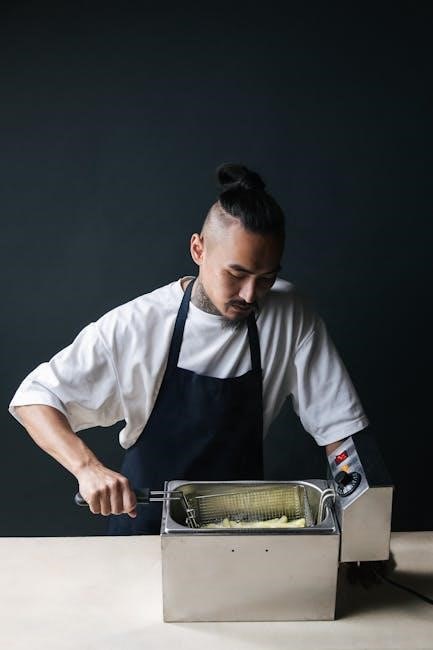
Maintain consistent temperature throughout the frying duration. Avoid leaving the fryer unattended. Be prepared to adjust the burner to compensate for temperature fluctuations. The entire process requires focused attention to ensure safety and optimal results.
Lowering the Turkey into the Oil
Prior to lowering, re-confirm the turkey is securely hooked onto the lifting mechanism. Slowly and deliberately descend the turkey into the hot oil, maintaining a firm grip on the hook. This step is critical; rapid immersion can cause dangerous oil splatter and potential burns.
Control the speed of descent – a gradual lowering minimizes bubbling and splashing. Observe the oil level carefully; ensure the turkey is fully submerged without exceeding the maximum fill line. Monitor for any immediate, excessive bubbling which could indicate moisture issues.
Once fully submerged, immediately release the lifting hook mechanism, allowing the turkey to rest securely in the oil. Continue vigilant monitoring of the oil temperature, adjusting the burner as needed to maintain the target 350°F. Never leave the fryer unattended during this phase.
Monitoring Oil Temperature During Frying
Consistent temperature control is paramount for safe and effective frying. Utilize the built-in thermometer to continuously monitor the oil’s heat, aiming for a stable 350°F (177°C). Fluctuations are normal, but significant deviations require immediate adjustment of the burner’s flame.
If the temperature drops below 325°F (163°C), increase the burner output gradually. Conversely, if it exceeds 375°F (190°C), reduce the flame or briefly turn it off to allow the oil to cool. Avoid drastic changes, as these can impact cooking consistency.
Regular checks – every 5-10 minutes – are crucial. Note that introducing the turkey initially causes a temperature drop; compensate accordingly. Maintaining a stable temperature ensures even cooking and a crispy exterior. Never rely solely on timer settings; temperature is the key indicator.
Frying Time Based on Turkey Weight
Calculating accurate frying time is vital for a perfectly cooked turkey. A general rule of thumb is 3-4 minutes per pound (450g) of turkey. However, this is an estimate and can vary based on oil temperature consistency and the fryer’s efficiency.
For a 12-pound turkey, expect a frying time of approximately 36-48 minutes. A 16-pound turkey will require roughly 48-64 minutes; Always err on the side of caution and prioritize internal temperature over strict time adherence.
Begin checking the internal temperature with a meat thermometer after the minimum calculated time. Insert the thermometer into the thickest part of the thigh, avoiding the bone. The turkey is done when it reaches 165°F (74°C). Remember, carryover cooking will continue to raise the temperature slightly after removal.
Removing the Turkey from the Oil
Carefully and slowly lift the turkey from the hot oil using the provided hook or a dedicated turkey lifting device. Avoid sudden movements to prevent oil splashing. Ensure a firm grip and maintain a controlled ascent.
Position the turkey directly over the fryer pot to allow excess oil to drain back into the pot for a short period. This minimizes mess and conserves oil. Be extremely cautious during this phase, as the oil and turkey will be exceptionally hot.
Transfer the turkey to a large, heat-resistant pan or platter lined with paper towels. This will help absorb any remaining oil. Allow the turkey to rest for at least 20-30 minutes before carving. Never attempt to carve a hot turkey; it’s a safety hazard!
Draining and Cooling the Turkey
After removing the turkey from the fryer, allow ample oil to drain back into the pot – this is crucial for safety and oil conservation. Gently shake the turkey over the pot, but avoid vigorous movements that could cause splattering.
Transfer the drained turkey to a large, sturdy roasting pan or a heat-resistant platter lined with several layers of paper towels. The paper towels will absorb excess oil as the turkey cools. Ensure the pan is large enough to accommodate all runoff.
Allow the turkey to cool for a minimum of 30-45 minutes before carving. This cooling period is essential for safe handling and prevents burns. Do not cover the turkey tightly while cooling, as this can trap steam and affect the skin’s crispness. A loose tent of foil is acceptable.
Checking for Doneness
Accurate temperature measurement is vital to ensure your turkey is safely cooked. Use a reliable meat thermometer inserted into the thickest part of the thigh, avoiding the bone. The internal temperature must reach 165°F (74°C) to be considered safe for consumption.
Check the temperature in multiple locations within the thigh to confirm even cooking. Also, verify the breast reaches at least 160°F (71°C). Remember that carryover cooking will continue to raise the temperature slightly after removal from the oil.
If the turkey hasn’t reached 165°F, carefully return it to the fryer for additional cooking time, monitoring the oil temperature closely. Avoid overcrowding the fryer and maintain a safe cooking environment. A properly cooked turkey will have juicy, flavorful meat and crispy skin.
Cleaning the Turkey Fryer
Allow the fryer and oil to cool completely before beginning the cleaning process – this is crucial for safety! Once cooled, carefully drain the used oil into a suitable container for proper disposal (see ‘Oil Disposal Methods’ section). Never pour used oil down the drain.
Remove any remaining food particles from the pot and basket. Wash these components with warm, soapy water and a non-abrasive sponge. Avoid harsh chemicals or scouring pads that could damage the surfaces. Rinse thoroughly and allow to air dry completely.
Inspect the burner assembly for any clogs or debris. Clean with a brush or compressed air if necessary. Wipe down the exterior of the fryer with a damp cloth. Proper cleaning ensures longevity and optimal performance of your Masterbuilt turkey fryer.
Oil Disposal Methods
Proper disposal of used frying oil is essential for environmental responsibility and preventing plumbing issues. Never pour used oil down the drain, as it can cause significant blockages and harm to wastewater treatment systems.
The preferred method is to allow the oil to cool completely, then carefully pour it into a sealed, leak-proof container, such as the original oil bottle or a designated recycling jug. Many communities offer oil recycling programs or designated drop-off locations. Check with your local waste management authority for specific guidelines.
Alternatively, you can solidify the oil by mixing it with an absorbent material like kitty litter or sawdust before disposing of it in a sealed bag with your regular trash. Always verify local regulations regarding oil disposal, as they may vary. Responsible oil disposal protects our environment.
Storing the Turkey Fryer
Proper storage extends the life of your Masterbuilt turkey fryer and ensures it’s ready for next season. Before storing, ensure the fryer is completely cool, clean, and dry. Remove the propane tank and store it separately in a well-ventilated, outdoor area, away from heat sources and direct sunlight, following all safety guidelines for propane storage.
Clean all components thoroughly, including the pot, basket, and burner assembly, to prevent corrosion and residue buildup. Store the fryer indoors, in a dry location, protected from the elements. Cover the fryer to prevent dust accumulation.

Inspect hoses for cracks or damage before storing, and replace them if necessary. Store the instruction manual with the fryer for future reference. Properly stored, your turkey fryer will provide years of delicious results.
Troubleshooting Common Issues
Oil temperature fluctuations can occur due to wind or cold weather; use a wind shield and ensure adequate propane levels. Uneven cooking often results from an improperly thawed or seasoned turkey – ensure thorough thawing and even seasoning distribution. Prevent oil overflow by carefully calculating oil displacement before heating, and never overfill the pot.

If the burner won’t ignite, check the propane tank connection and ensure the tank isn’t empty. A sputtering burner may indicate a dirty burner assembly; clean it according to the cleaning instructions. If the turkey is cooking too slowly, verify the oil temperature is within the recommended range.
Always prioritize safety. If you encounter an issue you cannot resolve, consult the Masterbuilt support resources or a qualified technician. Never attempt repairs yourself if you are uncomfortable or unsure.
Preventing Oil Overflow
Accurate oil level calculation is crucial to prevent dangerous overflows. Before heating, place the turkey in the fryer basket and fully submerge it in the pot. Mark the oil level on the inside of the pot – this is your maximum fill line. Remove the turkey before heating the oil.
Never exceed the maximum fill line. Remember that the turkey will displace oil when added, and oil expands when heated. Always maintain several inches of space between the oil level and the pot’s rim. Avoid rapid heating, as this can cause the oil to expand quickly and overflow.
Monitor the oil level closely during the entire frying process. If you notice the oil rising dangerously close to the rim, immediately turn off the burner. Ensure the fryer is placed on a level, stable surface to minimize the risk of spills.
Addressing Uneven Cooking
Uneven cooking often stems from improper turkey preparation. Ensure the turkey is completely thawed and thoroughly dried, both inside and out. Patting it dry with paper towels removes excess moisture that can lower oil temperature and lead to inconsistent results.
Brining helps promote even cooking by ensuring the turkey absorbs moisture uniformly. If not brining, ensure seasoning is applied evenly across the entire surface, including under the skin. Rotating the turkey during frying can also help, though careful handling is essential.
Maintaining a consistent oil temperature is paramount. Fluctuations can cause some areas to cook faster than others. Use a reliable thermometer and adjust the burner as needed. If unevenness persists, consider using a meat thermometer to check the internal temperature in multiple locations – breast, thigh, and wing – to pinpoint problem areas.
Masterbuilt Support and Warranty Information
Masterbuilt stands behind the quality of its products. For assistance with your turkey fryer, visit the official Masterbuilt website at www.masterbuilt.com. There, you’ll find a comprehensive FAQ section, troubleshooting guides, and downloadable manuals.
Customer support is available via phone and email. Contact details are listed on the Masterbuilt website under the “Contact Us” section. Be prepared to provide your model number and purchase date when reaching out for support.
Warranty coverage varies depending on the specific model and components. Generally, Masterbuilt offers a limited warranty against defects in materials and workmanship. Review your product’s warranty card or the online warranty information for details regarding coverage duration and exclusions. Proper registration of your product is crucial to validate your warranty claim.
Resources for Recipes and Tips
Elevate your turkey frying experience! Beyond this manual, numerous online resources offer delicious recipes and expert tips for achieving a perfectly fried turkey. Explore the Masterbuilt website’s recipe section for curated ideas, ranging from classic seasonings to innovative marinades.
YouTube is a treasure trove of instructional videos. Search for “Masterbuilt turkey fryer” to find demonstrations on setup, frying techniques, and safety precautions. Many experienced cooks share their personal tips and tricks.
Online forums and barbecue communities provide a platform for exchanging ideas and troubleshooting challenges. Websites dedicated to outdoor cooking often feature dedicated threads on turkey frying. Don’t hesitate to ask questions and learn from others’ experiences. Remember to always prioritize safety and follow recommended guidelines when experimenting with new recipes or techniques. Happy frying!